

How to Determine the Right Sandblasting Service for Your Next Project
When selecting surface preparation methods for restoring heavy machinery, preparing structural steel for protective finishes, or refreshing aged masonry, property owners and project managers must exercise extreme care. Choosing a professional sandblasting service provides an efficient, thorough solution for removing deep rust, flaking paint, mill scale, and stubborn environmental contaminants from various substrates. However, not every service contractor possesses the same level of equipment sophistication, technical training, or abrasive media expertise. Partnering with an underqualified contractor can lead to severe material damage, such as warped sheet metal, pitted surfaces, or inadequate coating adhesion that results in early product failure. Consequently, commercial clients, custom fabricators, and industrial facility managers must systematically evaluate prospective providers based on technical capabilities, safety compliance, and proven industry track records. Understanding essential evaluation criteria—including substrate assessment, media selection, containment protocols, and equipment versatility—enables project planners to select a qualified contractor capable of delivering flawless surface preparation tailored precisely to project specifications across every phase of execution.
Evaluate Surface Materials and Project Scope
Before contacting surface preparation specialists, project planners must thoroughly analyze the physical properties and structural characteristics of the material requiring treatment. Different substrates respond uniquely to abrasive particle impacts, meaning that heavy structural steel beams demand vastly different operational settings than thin sheet metal or delicate brickwork. A reliable sandblasting service evaluates substrate hardness, material thickness, existing surface contamination, and underlying structural integrity before recommending a specific blasting pressure or media type. For example, heavy industrial iron machinery can easily endure high-pressure steel grit blasting to strip thick corrosion, whereas soft aluminum panels or historic timber components require significantly lower operating pressures paired with softer organic abrasives. Failing to adjust abrasive impact velocity according to material vulnerability often causes severe surface warping, unwanted pitting, or permanent structural degradation. Clearly establishing project parameters, surface fragility, and desired final finishes ensures that prospective contractors propose safe, effective treatment methodologies customized for your specific application requirements.
Identify Appropriate Abrasive Media Options
Achieving optimal surface cleanliness and profile depth depends heavily on selecting the ideal abrasive media for the specific material being treated. Modern surface preparation facilities utilize a broad array of blast media, including crushed glass, garnet, aluminum oxide, walnut shells, corn cobs, and recycled glass beads. According to Fractory, common mesh sizes for sandblasting are 20/40, 40/70, and 60/100. Coarser mesh sizes create deep anchor patterns necessary for heavy-duty industrial coatings, whereas finer particle sizes produce smooth, uniform surface finishes ideal for delicate restoration work or thin protective films. A knowledgeable sandblasting service maintains a diverse inventory of abrasive media and understands how particle shape, density, hardness, and velocity influence substrate behavior. Inquiring about a contractor's media selection process reveals their technical depth and guarantees that your substrate receives the precise surface profile required for long-lasting coating adhesion and overall finish quality.
Assess Contractor Equipment and Technical Capabilities
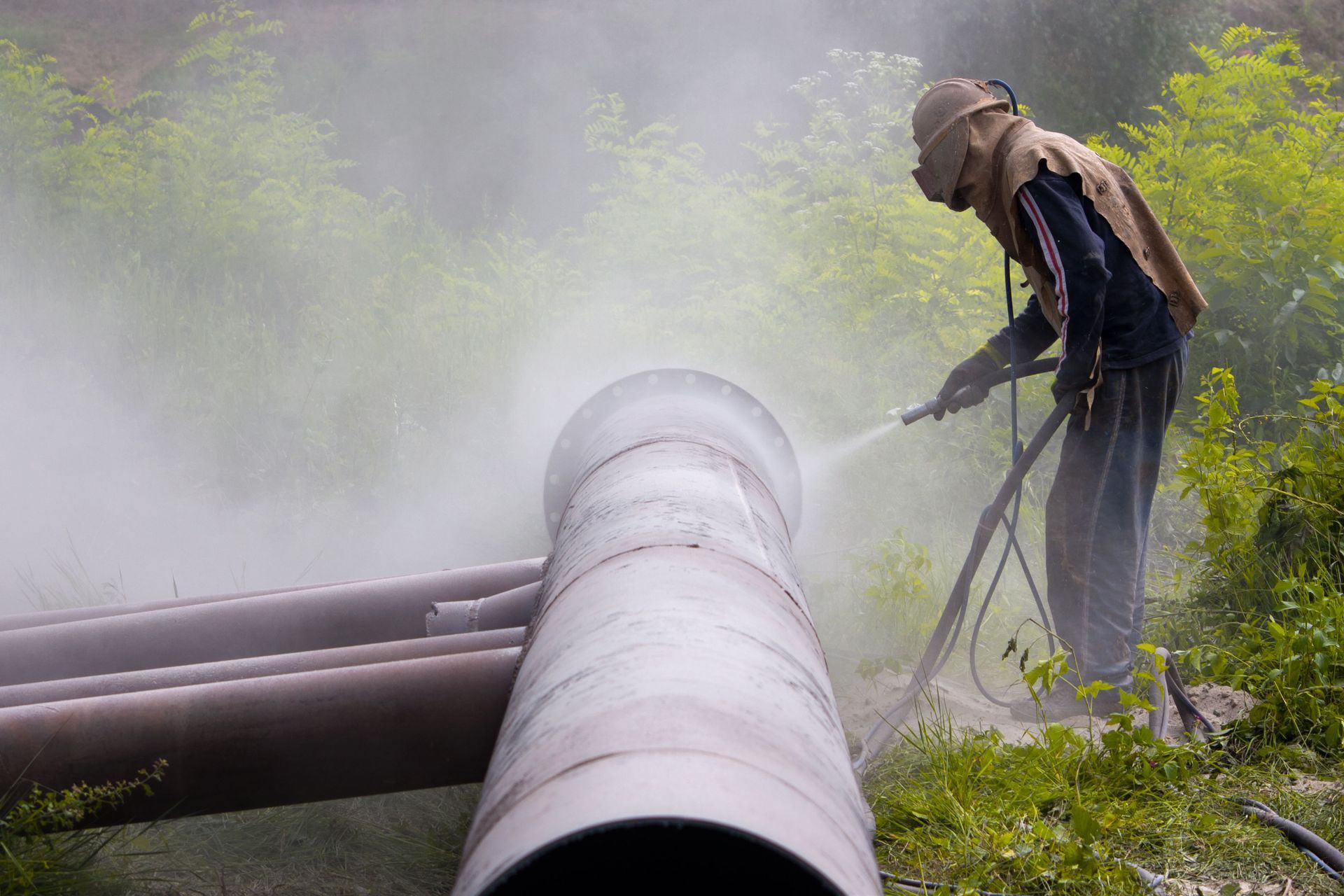
Surface preparation technology has advanced dramatically, offering specialized machinery designed for distinct operational environments and project scales. When interviewing prospective service providers, evaluate their equipment inventory, including stationary blast cabinets, expansive walk-in blast chambers, and mobile field rigs. A well-equipped sandblasting service utilizes high-volume air compressors, industrial moisture separators, continuous-feed pressure pots, and precision metering valves that maintain steady, controllable abrasive flow. For stationary structures, outdoor architectural projects, or massive field equipment, verify whether the contractor provides fully equipped mobile units capable of operating on location. On-site blasting operations demand specialized containment shrouds, heavy-duty vacuum recovery systems, and powerful dust collection units to maintain clean, safe job sites. Inspecting a provider's machinery ensures they possess the operational capacity, pressure regulation range, and logistical mobility needed to execute your project efficiently without technical bottlenecks or unexpected equipment downtime.
Verify Safety Standards and Environmental Compliance
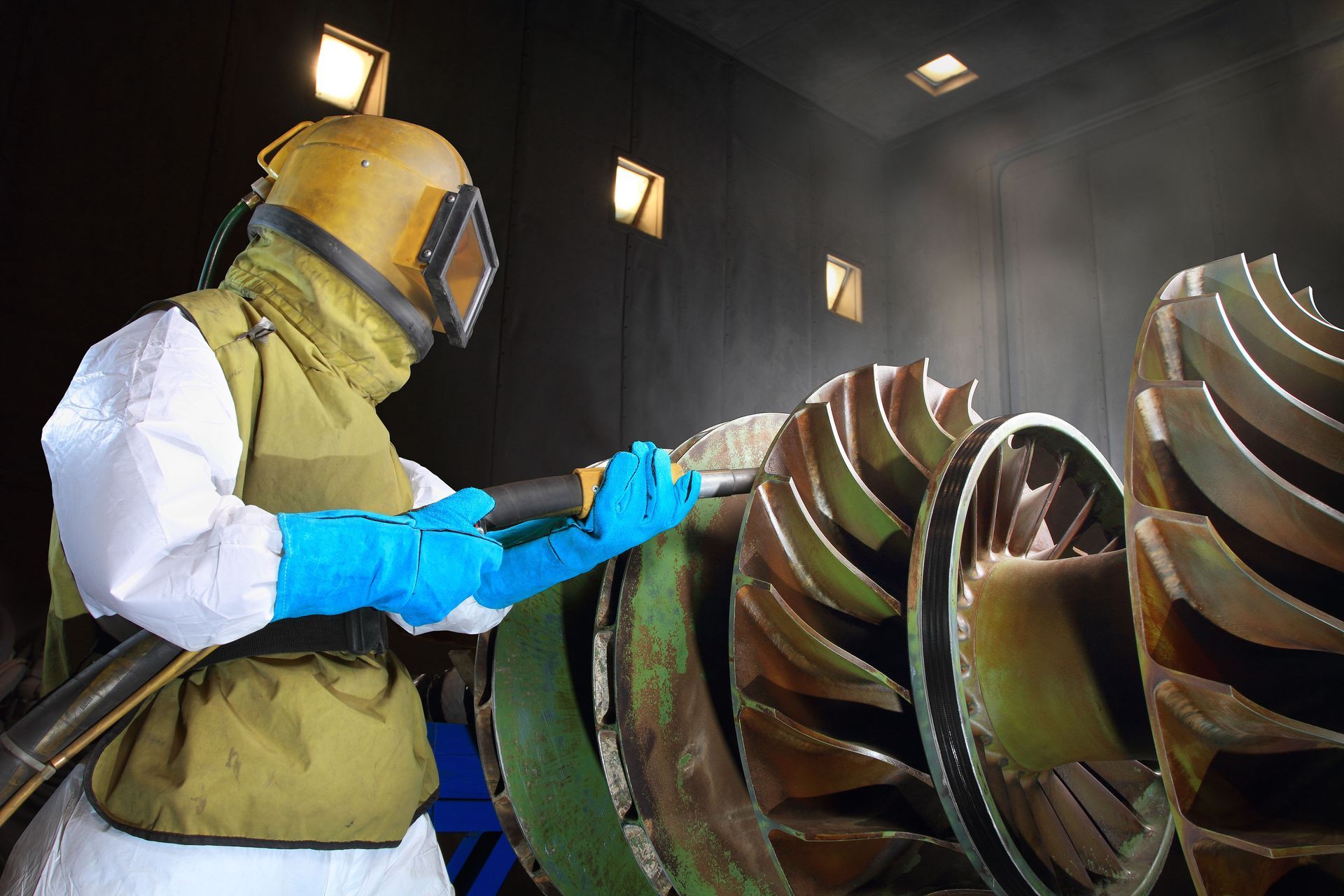
Abrasive blasting operations generate fine airborne particulates, spent media debris, and hazardous dust from old lead-based coatings or toxic industrial primers. Consequently, workplace safety protocols and environmental compliance serve as critical criteria when selecting a trustworthy service provider. A professional sandblasting service strictly enforces rigorous occupational health guidelines, equipping technicians with positive-pressure supplied-air respirators, heavy leather protective suits, and specialized blast helmets. Furthermore, conscientious contractors employ negative-pressure containment enclosures, dust suppression water misting systems, and eco-friendly waste recovery protocols to capture spent media and hazardous dust responsibly. Asking potential service partners about their hazardous waste disposal methods, site containment procedures, and technician safety certifications protects your business from potential environmental liability, regulatory fines, and workplace safety hazards during project execution.
Review Portfolio Experience and Industry Credentials
Practical experience plays an indispensable role in achieving consistent, high-quality surface preparation across challenging materials. Reviewing a contractor's historical project portfolio provides valuable clarity regarding their technical versatility, attention to detail, and operational standards. A reputable sandblasting service should readily present case studies, client references, and high-resolution visual evidence demonstrating successful outcomes on projects similar to yours. Seek contractors with documented success in your specific industry sector, whether that involves marine vessel maintenance, automotive chassis restoration, structural steel fabrication, or historical architectural preservation. Additionally, industry certifications from recognized surface protection associations demonstrate a contractor's commitment to continuous technical education and strict quality control standards. Partnering with an experienced, certified surface preparation specialist minimizes project risks and ensures superior craftsmanship from initial assessment through final quality control checks.
Compare Detailed Estimates and Turnaround Schedules
Obtaining comprehensive, itemized proposals from multiple contractors enables project managers to compare pricing structures, included services, and estimated completion timelines effectively. A dependable sandblasting service provides transparent cost breakdowns detailing surface inspection fees, blast media expenses, labor hours, containment setup, and post-blast cleanup procedures. Exercise caution when reviewing vague or unusually low estimates, as budget pricing often signals hidden charges, inferior media quality, or rushed labor practices. Additionally, discuss turnaround expectations and weather contingency planning for outdoor blasting tasks, since high ambient humidity or sudden rain can cause rapid flash rusting on freshly blasted steel surfaces within hours. Choosing a contractor who balances competitive pricing with realistic scheduling and clear communication ensures a smooth, predictable project execution without costly surprises or prolonged operational delays.
Selecting the ideal surface preparation provider ensures that your materials receive meticulous treatment, technical accuracy, and proper coating readiness. By evaluating substrate characteristics, abrasive media options, machinery capabilities, safety protocols, and industry experience, you establish a solid foundation for durable coating performance and successful project completion across all applications. Taking the extra time to thoroughly vet potential contractors guarantees that your valuable substrates are protected against surface damage, unexpected project downtime, and premature coating adhesion failures. Furthermore, establishing clear expectations regarding surface cleanliness, anchor profile depth, and job-site environmental controls ensures a seamless workflow from initial abrasive preparation to final protective finishing.
At K & S Powder Coating, we specialize in delivering high-performance surface preparation and custom finishing solutions tailored to your exact industrial, commercial, or residential specifications. Our experienced team combines state-of-the-art blasting technology with meticulous quality control to prepare your components for enduring beauty and maximum structural protection. We take immense pride in handling projects of all scopes and complexities, ensuring every piece undergoes rigorous cleaning, profiling, and surface testing prior to final coating application. Whether you require delicate restoration for intricate vintage metalwork or heavy-duty abrasive treatment for large industrial fabrications, our facility is equipped to handle your requirements with uncompromised craftsmanship. By offering seamless, end-to-end processing under one roof, we eliminate unnecessary vendor delays and provide complete quality assurance from initial abrasive treatment through final cure. Contact us today to discuss your project requirements and request a detailed technical consultation.
Share On: